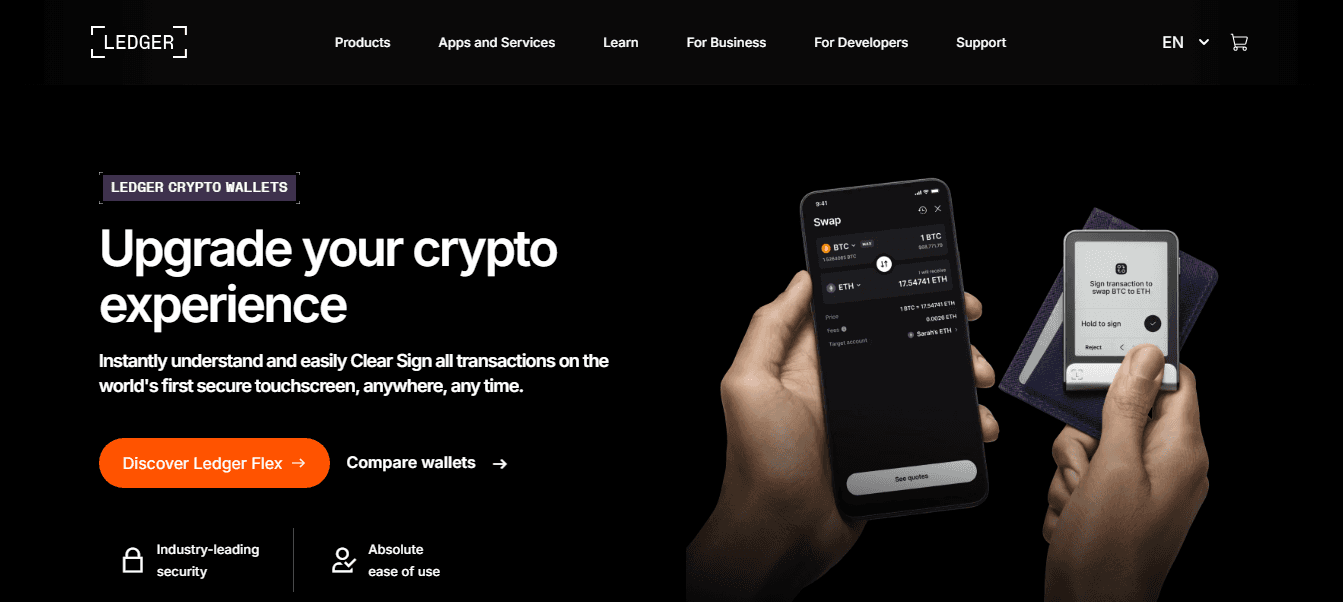
Ledger Login: A Fresh 1200-Word Guide
Accessing a Ledger wallet involves a process commonly referred to as “Ledger login.” While the term sounds similar to signing into an online account, the reality is very different. Ledger products are built around the idea of offline security, meaning nothing about the login process resembles the traditional username-and-password model. Instead, access relies completely on the physical hardware wallet, the PIN you create on that device, and your interaction with the Ledger Live application.
Understanding how Ledger login works is essential for safe and effective use. It not only clarifies what you’re doing each time you open Ledger Live but also helps you recognize how Ledger’s security model protects your digital assets. This guide takes you through everything: the philosophy behind the login structure, each step of the process, what happens after logging in, common mistakes, and best practices.
The Concept of Ledger Login
Ledger login is not based on cloud authentication or web accounts. Instead, the login process simply means verifying that you have the physical Ledger device and that you are authorized to unlock it. Once authenticated, the Ledger Live application can interact with your wallet while your private keys remain securely locked within the hardware wallet.
In practical terms, “Ledger login” is a combination of these actions:
physically connecting your Ledger device
unlocking it with its PIN
opening Ledger Live
letting the app detect the device
approving operations on the device screen
Rather than “logging in” to Ledger Live, you are essentially proving ownership of the wallet through your device.
Why Ledger Uses This Login Model
Ledger’s login system exists because the foundation of hardware wallet security is physical separation. By keeping private keys inside a dedicated device that never exposes them to the internet, Ledger reduces risks dramatically.
A. No Online Passwords
There is no risk of leaked account credentials because Ledger does not require an online login.
B. Hardware-Based Authentication
Instead of relying on a password typed into a computer, authentication happens only through your physical Ledger device.
C. Local PIN Confirmation
Your PIN is entered only on the Ledger device, making it impossible for keyloggers or malware on your computer to capture it.
D. On-Device Confirmation
Every critical action must be approved on the hardware wallet, creating a barrier that online attackers cannot bypass.
The entire process is structured around preventing unauthorized access even in compromised digital environments.
The Role of Ledger Live During Login
Ledger Live is the interface, not the vault. It lets you view balances, organize accounts, send and receive digital assets, and manage firmware updates. But it cannot approve transactions or access private keys.
Think of it like a dashboard that becomes fully functional only when a verified Ledger device is connected. Without the device:
you cannot access protected features,
you cannot sign transactions,
and you cannot manage accounts securely.
Ledger Live works together with the device, but the device always maintains full control of sensitive operations.
The Ledger Login Sequence Explained
Here is the entire workflow from start to finish, described clearly and simply.
Step 1: Connect the Hardware Wallet
Plug the Ledger device into your computer or phone using the appropriate cable. A steady connection is important so Ledger Live can detect the device properly.
Step 2: Unlock the Device
Once connected, the device screen prompts you to enter the PIN. This is the first security checkpoint. The device will stay locked until the correct PIN is entered.
Step 3: Launch Ledger Live
Open the Ledger Live application on your device. The app automatically searches for a connected Ledger wallet.
Step 4: Allow Ledger Live to Identify the Device
If the PIN was entered correctly and the device is recognized, Ledger Live displays that it is ready for use.
Step 5: Approve Sensitive Operations
Whenever you perform an action involving your assets—sending, adding accounts, updating apps—the Ledger device will request confirmation. Nothing can proceed until you approve it on the hardware wallet itself.
This is the core of Ledger login: a secure handshake between the wallet owner and the application.
What You Can Do After Logging In
Once the Ledger login is complete and the device is authenticated, a wide range of features become available in Ledger Live. These include:
A. Portfolio Overview
You can view the overall distribution and value of your holdings. Ledger Live represents data neatly, making it easy to understand.
B. Account Management
Add, remove, or organize wallets for different digital assets. Each account operates independently and contains its own transaction history.
C. Sending Assets
Ledger Live allows you to enter transaction details, but the final approval always takes place on the hardware wallet’s screen to ensure maximum safety.
D. Receiving Assets
Ledger Live shows your receiving address, and you can verify its accuracy on the Ledger device to avoid address tampering.
E. Transaction Tracking
You can monitor pending transfers, confirmations, and history in a structured layout.
F. Device Maintenance
Through Ledger Live, you can update firmware, manage applications, rename the device, or adjust settings.
These tools give users full control while keeping security intact.
Security Framework Behind Ledger Login
Ledger’s approach has several layers that work together to protect users:
Private Keys Never Leave the Device
Ledger Live interacts with public data only. All private key actions stay contained within the secure hardware environment.
PIN-Based Access
Only someone who knows the PIN can unlock the device. Repeated incorrect attempts result in a reset, which protects your funds even if the device is stolen.
Physical Confirmation
All important operations require on-device confirmation. Even if Ledger Live is compromised, attackers cannot access your funds.
Secure Element Chip
Ledger devices include a special chip designed to safeguard sensitive information from tampering.
Automatic Locking
If left idle, the device locks itself, ensuring no one can interact with it while you’re away.
This system works together to make Ledger login one of the safest mechanisms for managing digital assets.
Common Challenges and Their Causes
Even though the process is simple, users occasionally encounter issues during login. Most of these problems have straightforward explanations:
A. Device Not Detected
This can occur if the cable is faulty, the USB port is unstable, or an update is needed. Reconnecting or trying a different port often resolves the issue.
B. Incorrect PIN
Entering the wrong PIN too many times resets the device. This is a built-in protection mechanism to prevent unauthorized access.
C. App Permission Issues
On some devices, system permissions must be granted for Ledger Live to communicate with the hardware wallet.
D. Outdated Firmware or Apps
Ledger Live may request firmware updates before granting full functionality.
Understanding these potential challenges makes the login process less stressful and more predictable.
Good Habits to Maintain During Ledger Login
While Ledger’s system is secure by design, users also play an important role in keeping their wallets safe. During the login process, these habits help maintain strong protection:
Enter your PIN in a private environment.
Keep your recovery phrase stored offline in a safe place.
Never type the recovery phrase into any computer or phone.
Use only the official Ledger Live application.
Keep your device and Ledger Live updated.
Avoid using unsecured or shared computers for managing assets.
These simple habits work alongside Ledger’s built-in security features.
Why Ledger Login Feels Different but Works Better
For new users, Ledger login may feel unusual because there are no accounts, no passwords, and no online dashboards. However, this is the point. The absence of online credentials eliminates many risks.
This system offers:
stronger resistance to phishing
complete independence from cloud databases
reduced exposure to malware
full user control over critical actions
a trusted physical verification step
Ledger login takes a little getting used to, but once you understand the logic behind it, it becomes a comfortable and reassuring routine.
Final Overview
Ledger login is more than a simple access point—it is a protective gate designed to ensure that only the rightful owner of a Ledger device can interact with the assets stored inside. By using a PIN, a secure hardware environment, and physical confirmation, Ledger creates a strong defense against unauthorized access.
After logging in, Ledger Live becomes a powerful tool for managing your portfolio, monitoring transactions, organizing accounts, and keeping your device up to date. The combination of hardware-level security and user-friendly software makes Ledger login a safe, reliable, and smooth process.